Torsion vs Extension Springs: Which Does My Door Have?
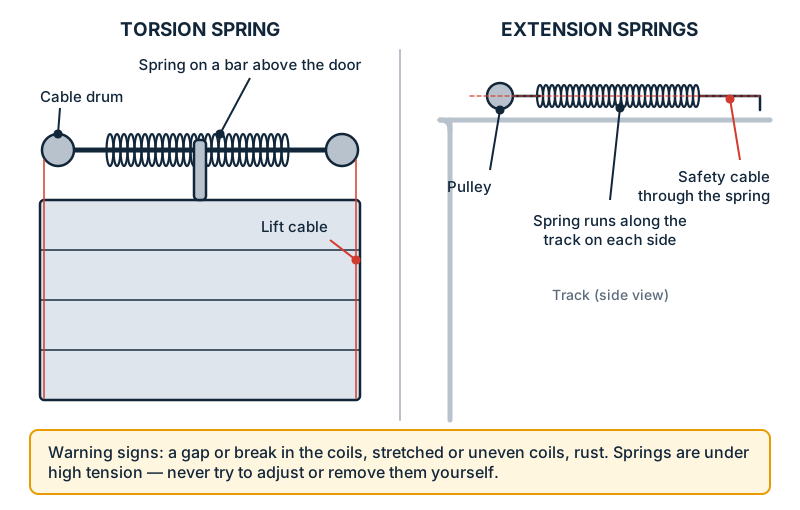
Look above the closed door. Springs on a metal bar across the top are torsion springs. Springs running along the horizontal tracks on each side are extension springs. Both lift the door's weight, and both are dangerous to work on.
Request a technicianWhat do they look like?
Torsion springs are tightly wound coils on a shaft above the door. Extension springs are longer and stretch out along each side track when the door is closed.
Which type is more common?
Most newer doors in Carmel-area subdivisions use torsion springs. Extension springs are more common on older homes, lighter doors and some detached garages.
How does each one fail?
A torsion spring usually breaks with a loud bang, leaving a gap in the coil. An extension spring can snap and whip around, which is why it should have a safety cable running through it.
Can I switch from extension to torsion?
Often yes. Torsion systems are smoother and safer, and a technician can quote a conversion when the springs are being replaced anyway.
Why not do it myself?
Both types are under high tension. Winding torsion springs or stretching extension springs without training and proper tools can cause serious injury. See spring repair.
How long do springs last?
Springs are rated for a number of cycles. A door used several times a day will need new springs sooner. Higher-cycle springs are available for busy households.
What should I tell the technician?
Say which spring type you have, how many there are, and whether one is visibly broken. The door's width and height, and whether it is insulated or has windows, help the technician bring springs of the right size. A photo of the spring bar or the side tracks is even better.
More garage door guides
Garage door trouble in Carmel?
Send a request and a garage door technician will get in touch. Requests answered 7 days a week.
Request a technicianPrefer email? [email protected]